

Key takeaways
- Under NSW WHS law, a vehicle counts as a workplace.
- There's no set temperature where work must stop, so you have to manage the actual risk.
- SafeWork NSW lists air-conditioned cabins as a heat control and says to keep AC serviced.
- Treat a failed cab AC in summer as a priority repair.
The cab is the workplace
For a lot of your people, the cab is where the shift happens. Truck drivers, plant operators and service crews working out of a ute can spend hours in a vehicle on a hot day, often parked in full sun.
NSW law treats that cab as a workplace. The Work Health and Safety Act 2011 defines a workplace as any place where work is carried out for a business, and says a place includes a vehicle. Your duty to keep workers safe, so far as is reasonably practicable, applies inside the cab just as it does anywhere else on the job.
What WHS law expects in the heat
The WHS Regulation adds a specific requirement: workers doing work in extreme heat must be able to do it without risk to their health and safety. Safe Work Australia's guide to working in heat says you handle that like any other risk. Eliminate it so far as is reasonably practicable, and where you can't, minimise it.
There's no magic number where work has to stop. Safe Work Australia says a single stop-work temperature can't account for everything that makes heat dangerous, such as humidity, air movement, radiant heat from the sun, how hard the work is and what people are wearing. You have to look at the actual conditions and the actual job.
You also have to consult. SafeWork NSW says workers and their health and safety representatives must be consulted at each step, and suggests putting agreed parameters into a written heat management plan.
Where cab AC fits in the controls
Safety controls are ranked, and installing air conditioning is an engineering control. That puts it above rosters, rest breaks and other administrative controls, which Safe Work Australia notes are less effective than other measures. Breaks and water still matter, but they work best on top of a cab that actually cools.
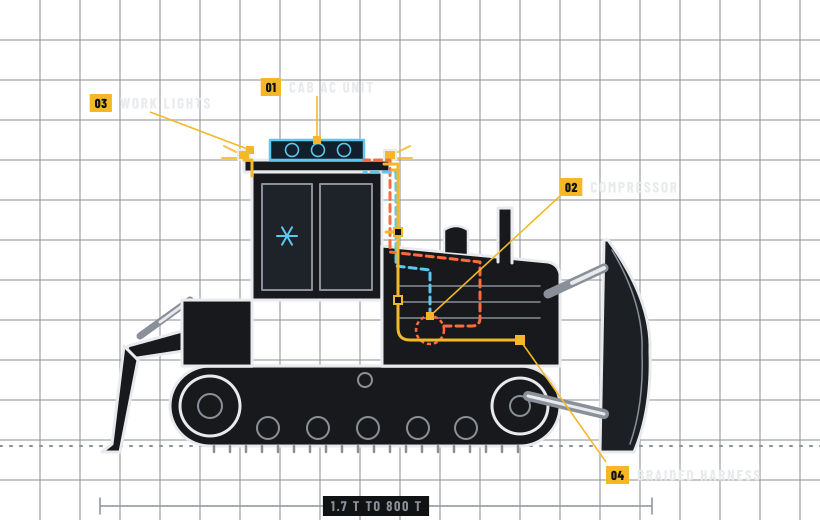
SafeWork NSW is specific about vehicles. Its guidance on managing extreme heat lists air-conditioned cabins in cars, mobile plant and other equipment as a control. It also says air conditioners should be regularly serviced and maintained so they don't break down during a heatwave.
Its code of practice on the work environment adds that broken air conditioning should be repaired or replaced promptly. It also recognises that for outdoor and remote workers, a vehicle may be the only shelter on hand. For a crew that works out of a fleet ute all day, dead AC can mean nowhere cool to take a break.
Who's most exposed
Heat risk isn't spread evenly across a business. When you plan for summer, look first at these people:
- Outdoor crews, who work in the sun and rely on the vehicle to cool down during breaks
- Plant operators on civil and earthmoving sites, in glass-heavy cabs and often on long shifts
- Truck drivers on long runs, or stuck waiting at sites and depots
- New starters, who may not be acclimatised to the heat yet
- Lone workers, who need regular check-ins and an easy way to call for help
A practical plan for summer
Workers have duties too: to take reasonable care of their own health and safety and to follow reasonable instructions. Make it clear that a cab AC that isn't keeping up gets reported, not put up with. SafeWork NSW's own advice is that anyone who thinks their workplace is too hot should report it. Then build the rest of the plan around that:
- Get every vehicle and machine AC checked before summer, starting with the ones crews depend on most. Our pre-summer AC checklist shows how.
- Add AC to the pre-start so problems are flagged early, not mid-shift.
- Treat a failed cab AC in summer as a priority repair, not something that waits for the next scheduled service.
- Agree who gets told when one fails, and what the crew does in the meantime.
- Provide cool drinking water and breaks somewhere cool, and schedule the hardest work for cooler parts of the day where you can.
- Use a buddy system or regular check-ins, especially for anyone working alone.
- Train people to recognise heat-related illness using SafeWork NSW material, and roster trained first aiders on every shift.
Lean on the official guidance
This post is a starting point, not medical or legal advice. SafeWork NSW and Safe Work Australia both publish detailed guidance on working in heat, including the warning signs of heat-related illness and what to do about them. Use that guidance as the basis for your heat management plan and training, and get advice for your own situation if you need it.
Quick answers
Is there a temperature at which my crew can stop work?
Safe Work Australia says there isn't a single stop-work temperature. You need to assess the conditions and the work, consult your workers and put controls in place. SafeWork NSW suggests writing any agreed parameters into a heat management plan.
Where do I find the official heat guidance?
Start with SafeWork NSW's pages on working in extreme heat and Safe Work Australia's guide for managing the risks of working in heat. Both are listed in the sources for this post.
Sources
- SafeWork NSW: Managing extreme heat at your workplace
- SafeWork NSW: Code of practice, managing the work environment and facilities (2019)
- Safe Work Australia: Guide for managing the risks of working in heat (2021)
- Safe Work Australia: Working in heat, frequently asked questions
- NSW Legislation: Work Health and Safety Act 2011 No 10